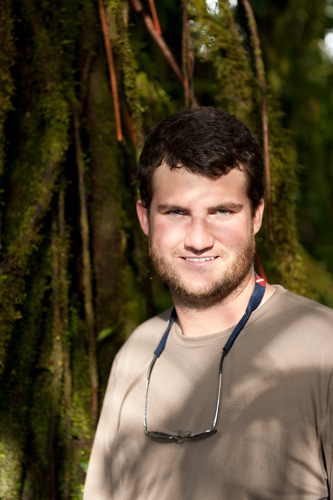
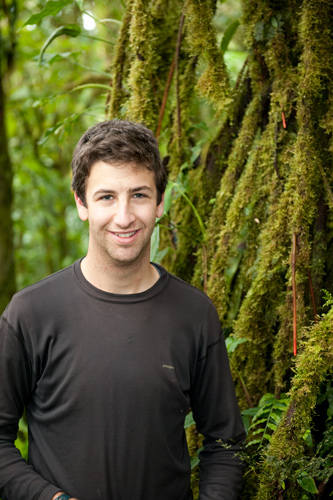
Drew Fulton is a photographer with a passion for exploring the natural world. He is an avid birder and lifelong naturalist and brings that knowledge and experience to his photography. As a Thomas J. Watson Fellow, Fulton has recently completed a year of extensive travel throughout Australia searching for and photographing Australia's numerous endemic birds.
Previously, Fulton earned a B.A. with honors from Bowdoin College where he designed his own major combining environmental science with photography and ecology. For his honors thesis, Fulton produced a book of photographs and essays about the Florida Everglades, a project which included a five month residency in Everglades National Park.
His work has been published in several field and site guides as well as recognized in the 2003 Nature Photographer's Network Editor's Picks and the Delta Sigma/Sigma Upsilon Art contest at Bowdoin College. His solo exhibition at Bowdoin College of over 100 prints from the Everglades earned him the Richard F. Martel Jr. Memorial Prize.

Greg Goldsmith is a doctoral candidate in the Department of Integrative Biology at the University of California, Berkeley, where he holds a National Science Foundation Graduate Research Fellowship. His research focuses on the use of plant ecophysiological techniques to understand the effects of climate change on plant communities. Goldsmith's work aims to generate mechanistic science with the ability to inform real-time conservation and restoration efforts. He has previously conducted arctic, alpine, neotropical, and paleotropical research with funding from the National Science Foundation, the Smithsonian Institution, the American Philosophical Society, the Arctic Institute of North America, and the Freeman Foundation for Asian Studies. Goldsmith earned a B.A with honors in biology and environmental studies from Bowdoin College.
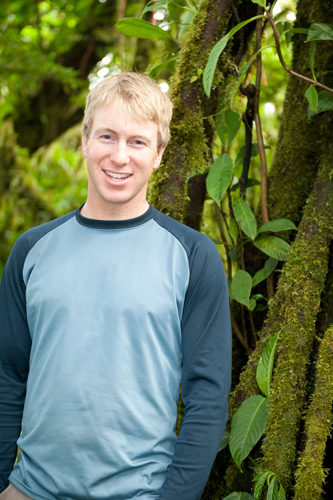
In addition to his background as a scientist, Goldsmith brings significant experience in teaching and communicating ecological science. He serves on the board of directors for the non-profit science education organization Ecology Project International, with whom he previously taught tropical biology to high school and college students from the United States and Costa Rica. Goldsmith has lectured to public and scientific audiences at Smithsonian Tropical Research Institute, Toolik Field Station, the Maine State Climate Summit, Simmons College, and the University of California, Berkeley. His research is published in Forest Ecology and Management, Revista de Biologia Tropical, Biotropica, Journal of Ecology, Ecological Research, and Frontiers in Ecology and the Environment.

Colin Witherill is a cinematographer specializing in adverse climates and remote locations around the globe. Captivated by natural beauty and the challenges of capturing its nuances through moving pictures, Witherill created a self-owned and operated production company, Broadreach Images. Since its launch in 2006, Witherill has been the primary camera operator on several nationally syndicated television programs, commercials, and feature films. His clients include Nike, PBS, The Weather Channel, Subaru, Fox Sports Network, CBS, Patagonia, Warren Miller Entertainment, and World Wildlife Foundation. Prior to beginning Broadreach Images, Witherill earned a B.A. in anthropology from Colby College.
Witherill's recent film Ski For Nature, captured on the Kamchatka peninsula in Russia, documented initial efforts to create a working model of sustainable, backcountry ski tourism for the region. Desperately needing funds to fend off the onslaught of environmental exploitation, steps were taken to capture the highlights and explore the potential problems of attracting eco-minded winter enthusiasts to experience Kamchatka's vast winter wilderness.
Erin Dukeshire is a science teacher at the Academy of the Pacific Rim Public Charter School in Hyde Park, MA. Erin has taught science to students in grades five through nine, with a focus on student-centered, inquiry-based instruction. Dukeshire is an alumna of Teach For American (Miami-Dade '05) and a coordinator of the Boston Teach For America Alumni Learning Team. She holds a B.A. from Bowdoin College and is a graduate student in education at Simmons College.
Javier Espeleta is the executive director of the Tropical Science Center in Costa Rica, where he is responsible for overseeing the organization's mission for promoting research, education and outreach in tropical ecology. Prior to joining the Center, he was the scientific director of Biosphere 2 at the University of Arizona, and a postdoctoral associate at the University of Minnesota. Javier holds a Ph.D. in plant ecophysiology from the University of Georgia, an M.S. in plant physiology from the University of Florida and a B.A. in agronomy from the University of Costa Rica. Javier’s research topics include plant root ecology, biogeochemistry and global change science and he has also developed educational and outreach projects on these subjects in the US and Costa Rica. His work has been published in Ecology, Ecological Monographs, EOS, Forest Ecology and Management, Frontiers in Ecology and the Environment, Oecologia, Plant and Soil, Tree Physiology, and the Journal of Natural Resources and Life Sciences Education.
Felipe Lóaiciga Espeleta is in the New School of Sound Engineers at Instituto DuocUC in Santiago, Chile, where he is finishing his final semester. His passion is in taking nature sound design to a new level, which he strives to do both in his studies and his outside productions. His background in nature sound includes experience in design, production and mixing. He is currently collaborating with a classmate, Ricardo Pujol, on an organic electronic music project called Selianego. Felipe was honored with Instituto DuocUC's award for best song mixing in 2009.
Eric Fitz has a background in mechanical engineering and recently joined Navigant Consulting's Renewable Energy group in San Francisco, CA. His focus is on policy development, corporate strategy, and technology due diligence. He holds a B.A. in physics from Colby College and a B.S. in engineering sciences from Dartmouth College. While working for General Electric Energy, he also completed a M.M.E. from the Georgia Institute of Technology.
Adriana Quirós-Arauz is a botanist and environmental educator with experience developing educational programs for elementary and middle schools in the US and Costa Rica, particularly in biological stations and botanical gardens. She has served as coordinator of the Latin American Ethnobotanical Gardens Network and the Organization for Tropical Studies’ environmental education program at La Selva Biological Station in Costa Rica. In addition, Adriana has been an instructor at EARTH University and has supported science education at Biosphere 2 at the University of Arizona. Adriana holds a M.S. in economic botany from the University of Georgia and a B.A. in agronomy from the University of Costa Rica. Adriana’s main objectives are to increase public accessibility to emerging scientific topics and to develop new ways for educating students about scientific processes and environmental topics, particularly tropical and global change biology.
Jennifer Reese is a science teacher at the F.A. Day Middle School in Newtonville, MA. A former instructor at Boston University's School of Education, Reese now co-directs the school's Nature & Me Project, a program designed to enhance Boston Public School students' interaction with local natural environments. She holds a B.A. in biology from Cornell University and a M.A. in science education from Boston University. She is a member of the National Science Teachers Association.
Meredith Trainor recently graduated with a Master of Environment Science (M.E.Sc.) from the Yale University School of Forestry and Environmental Studies, where she was studying community forest management in the Middle Hills region of Nepal. Prior to Yale, she was project coordinator for the National Geographic Society's Center for Sustainable Destinations and Coordinator the Partnership and University Program for the Changemaker's Initiative at Ashoka: Innovators for the Public. She holds a B.A. in environmental studies and political science from Hobart and William Smith Colleges.
Trysta Wall is a fellow's advisor for the New Teacher Project in Philadelphia, PA. Prior to joining the New Teacher Project, she was a science teacher in the Pennsauken Township Public School System in Pennsauken, NJ, at the Presentation School in Sonoma, CA and for Teach For America in Chicago, IL. She brings extensive experience designing and implementing new science curricula. She holds a B.A. in biology from University of Miami and a M.A. in teaching from National Louis University. She will complete a post-graduate certificate in supervision from Rutgers Graduate School of Education in Fall of 2010.